

Find What You Love and Let It Kill You #4
a PUNK NOIR Magazine series


Here it is, folks!
Issue Four of
Find What You Love
&
Let It Kill You
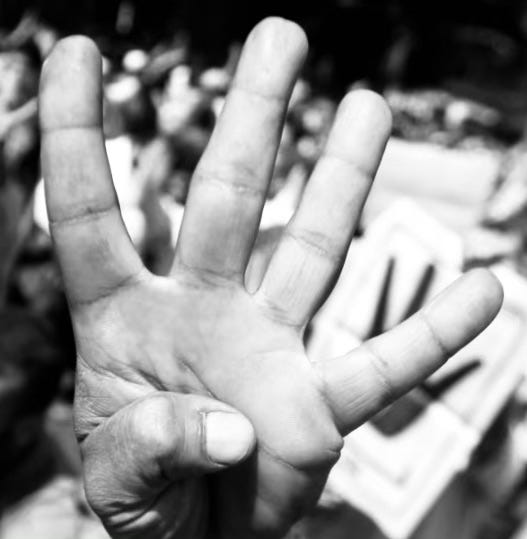
I’ve always been superstitious of the number four. A neuroticism exacerbated by the fact that out here in Japan it means death and is considered very unlucky.
一 ニ 三 四
Let’s count together!
Ichi – Ni – San – Shi
One Two Three Four (Death)
I often awake at 4:44 in the morning.
Spooky right?
Anyhow, the penultimate issue of FWYL&LIKY is anything but unlucky.
We’ve got a bag full of stories and they’re all good. DEAD good.
This series has actually been one of my favorites so far and I really dug the mixture of genres and narratives that we got.
Charles Bukowski would have been proud I’m sure.
I hope you’ve all enjoyed the series too. If you liked someone’s story please reach out to them and let them know.
The next two issues I’m going to drop are going to be the Champagne For My Real Friends and Real Pain For My Sham Friends Series in May and then FUCK THE MAINSTREAM in July, so get your stories ready for those.
Anyway, without further ado, here’s Issue Four!
Cheers
Steve
The Last Trick
by
Meghan Leigh Paulk
I stand onstage, perfectly poised. Prepared for what comes next. My nerves jangle, but no one will see me tremble. I wear a slinky red gown, eschewing the spangles and lace favored by other performers.
“On the count of three!” I call to my assistant, Bertie, who stands at the stage’s opposite end. With a showy grimace, I warble, “Aim carefully, darling!”
“Don’t worry!” Bertie hollers back. “I only had two martinis at lunch!”
Nervous titters come from the crowd. They’re too on edge to even laugh. I have them right where I want them. Full of a-n-t-i-c-i-p-a-t-i-o-n.
A magician never reveals her secrets, but I’ll let you in on mine. I live to defy your expectations. You think I can’t levitate this table? Up it goes! You don’t believe I can slice Bertie up into nine pieces and then put him back together? Ta-da! You think I won’t stick this GIANT needle through my arm? Watch me! The adrenaline charge I get from an amazed audience is better than any drug.
“One!” I shout, starting the countdown to my masterpiece.
I discovered magic at age eight, while playing the damsel in distress in my older brother’s homemade Indiana Jones knockoff. I wriggled out of my ropes before the hero even arrived. Mom called me “Houdini.” Well, then I had to know who Houdini was. So I read up on him and I fell in love. With magic.
“Two!”
Tonight, I’ll perform my greatest feat. The Bullet Catch. The riskiest illusion in magic. Bernie fires a bullet directly at me and I catch it in my teeth. Many, many magicians have died attempting the trick. But I’ll succeed where those fools failed. Yes, the Bullet Catch purportedly carries a curse. Curses don’t scare me.
“Three!”
No risk, no rewar—
BANG
Bio:
Meghan Leigh Paulk is an attorney by day, crime writer by night, living in Austin, Texas. Her short stories have appeared in Punk Noir, Shotgun Honey, and Ellery Queen Mystery Magazine. Her short story “It’s Half Your Fault” (EQMM July/August 2023) was nominated for the 2024 Robert L. Fish Memorial Award for best first short story by an American author.
Metastatic
by
Paul Radcliffe

Cancer is a mugger that waits in darkened hospital wards. It smiles to itself and gently reminds us of the conversations we had, the ones that reassured us that we have to die of something. We do, and we don’t have the choice. So we smoke. And we drink. And we hear about people who did the same, lived till they were ninety and never had a day’s illness in their lives.
And we believed it, as children believe in Santa.Which is why I drank for many years and also why I am slowly turning an unflattering shade of yellow. Eyes as well and-to complete the picture-my belly bulges outward and my liver-as I am told-has decided to spread the malignancy news to other organs. The banks have burst, so to speak. But I loved drinking and the doctors-ever cheerful-told me that that was the main reason I was in this hospital bed looking at a slice of cold toast while the lost soul in the next bed stares upward. No happy banter in the community of the unwell. The doctors were kind enough, I suppose, having no doubt seen it all before.They pointed out that being male was, well, a factor in my having metastatic liver cancer. They were kind enough not to mention the whisky, the beer and latterly-no point denying it-the equation that I needed to pour more and more down my neck to achieve the same effect. It is academic anyway now. The medics have delivered the bad news speech.
In the small hours, the cancer isn’t in the shadows. I loved drinking. It will kill me soon. And all those pub voices were right.
You have to die of something.
Bio:
Paul Radcliffe was born in Liverpool, lives in New Zealand and works in Emergency. He is not a great believer in happy endings, but glimpses them occasionally in his writing. He is fond of cats despite their repeated efforts at hypnosis. Although he is no academic, he hopes to produce a paper on Acronyms as Justification-A Pocket Guide for Defence Lawyers. It’s good to give something back. Whatever he writes about is underlined by a basic understanding. Nothing goes away.
The Madman, the Beggar, & Me
by
Ryan Fiennes

I step off the bus
wearing two shoes
that are more glue than leather,
carrying a typewriter under one arm
and a cardboard suitcase
under the other.
A new city, a new dawn.
There is only survival.
There is no other way.
There’s never been any other way.
Just ask the hustler who takes the last dime from the educated fool.
There is more knowledge
in the calloused hands
of the working man
than in all the suits in Washington.
Just ask the dust of the road & the leaves that fall from the fruitless trees,
that flutter into the gutter & land . . .
alongside the madman, the beggar, and me.
Bio:
Though primarily a writer of fiction, the poetry of Ryan Fiennes has been published by Trashlight Press, Literary Revelations Press, Sea Crow Press, and many other publishers, both in digital and traditional print.
The Snap Decision
by
Anthony Kane Evans
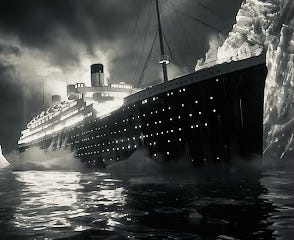
As usual, she’s ignoring me, and this six-month cruise, this so-called romance, seems to be moving in ever-decreasing circles. I check my life jacket in the mirror – it sits well – and throw myself over-board.
The liner looks more elegant now, it’s whiteness against the light blue of the sky, the turquoise of the sea; perhaps I wasn’t cut out to be on it in the first place, maybe I’m more the contemplative type, an arbiter of taste, even.
I recall why I’m here and laugh harshly.
“Take that,” I shout, not quite managing to get the fist out of the water.
Anthony Kane Evans has had around eighty short stories published in various UK, French, US, Canadian, Nigerian, Singaporean, and Australian literary journals, e-zines, and anthologies. Though born in Manchester, UK, he is currently to be found in Copenhagen, Denmark, where he has made several documentary films for the Danish Broadcasting Corporation.
Bluesky: @anthonykaneevans.bsky.social
Twitter: @AnthonyKaneEva1
Leo’s plan
by
Simon Firth
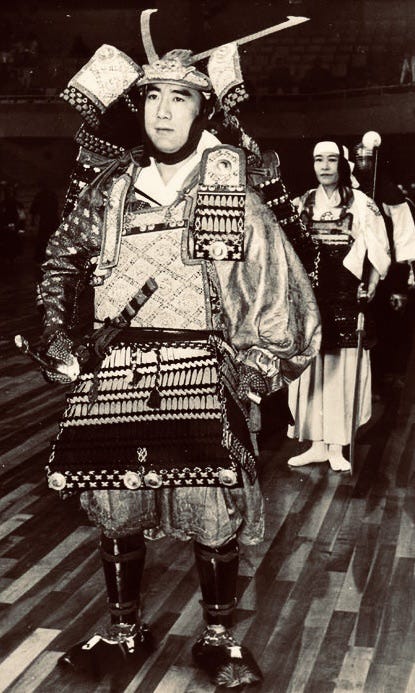
I met Leo one summer evening at a bar in Shinjuku. He was drinking alone, but insisted he’d been with friends; they abandoned me, he said. I told him my friends had left me long ago, or I’d left them. That’s how it goes, he said. He asked where I was staying. The Prince Hotel, I said (a lie), twenty minutes from here. Let’s walk there, Leo said, I’ve been sitting for too long.
We walked for hours. Leo said he’d lived here for years. He’d arrived as a bright-eyed literature student, determined to master the language and make something of himself. One evening, he met a man claiming to be the grandson of a member of Yukio Mishima’s private militia, who’d launched a failed, bloody coup to restore imperial rule. That uncompleted project is the great shame of this country, the man said. His grandfather stayed with Mishima to the end, right up until he drove the blade into his stomach at the Ichigaya garrison.
Leo was gripped by this uncompleted project. He left his wife and enlisted as a samurai at an academy in Saitama. For ten years he trained obsessively and immersed himself in Mishima’s works.
‘I concluded,’ Leo said, ‘that Mishima was insane, but not insane enough.’
He’d written a tract, The Last Restoration, scheduled to go online at nine tomorrow morning. It would coincide with the storming of the Ichigaya garrison, which would be livestreamed on YouTube.
‘But that’s over now,’ Leo said. ‘They abandoned me, the project…’
By chance we’d arrived back at the bar. Leo lit a cigarette and asked which hotel I was staying at. I said I couldn’t remember. I asked if he’d be recruiting again soon for his private militia.
‘Maybe,’ Leo said, as he walked off into the night.
Bio:
Simon Firth is a writer from Morecambe Bay.
Alpha-Gal, the Carnivore, and the Lone Star Tick
by
Jon Gluckman

My number one girl, my love, my entomologist wife got on this jag, making vegan meals. Like sweet potato and peanut curry, that looked like an intestinal discharge from a GI tract affliction. Like something scraped from my boots returning from the barn. I failed to see the point. Somewhere I read tomatoes scream when you cut them. And how many chickens had she whipped around like a cheerleader’s baton before chopping off their heads and then plucking them naked? God, did I love roast chicken. God, did I love my wife. The upshot, though, is something’s got to die for something to live. She’d changed. I wanted her back. The real Sarah. So I took her hunting.
“Stop crying,” I said, and shoved the Savage 11/110 Lady Hunter into her chest so she’d have to grab it. If looks could kill. And then we entered the forest.
The ticks were something awful. “Can’t see their usefulness,” I said to her. “Most things put upon this earth have a use.” Sarah just raised her eyebrows.
She must have pinched a dozen off my back, sitting on the mudroom bench, stripped to our skivvies, listening to them sizzle on the head of a match.
Two rabbits weren’t enough for dinner. So I told Sarah to defrost a steak. “None of that hippie garbage,” I said. I love steak.
“Put some butter and herbs in there. And bloody, too. Make it bloody,” I said.
I’d half of mine down. Sarah hadn’t touched hers. All she ate was the salad.
“Hear those tomatoes screaming from here,” I said, taking a huge swallow of milk, feeling its coolness roll down my throat.
Sarah made her eyebrows dance, and I nearly choked myself to death laughing.
Bio:
Retired English teacher Jon Gluckman writes in a small southern New Jersey town outside Philadelphia, PA, USA. He is grateful to share his life with his beautiful and brilliant wife, Barbara, and his two lovable, knuckleheaded rescue puppies, Arthur and Bella. He believes that despite the hardships, “Life is Good.”
The Ghost in the House
by
Epiphany Ferrell

The ghost in the house wants Count Chocula for breakfast. I pour the milk, the cereal becomes soggy. I bolt it down when my husband enters the room. He knows about the ghost, of course he does, but he doesn’t like it. Her. The rest of the box goes stale in the cupboard.
The ghost in the house wants a pony. I get another cat instead. It pisses in the corner, and my husband blames the ghost. The cat sits under our window and yowls. She’ll have kittens in the root cellar in a few weeks, one pale and spectral that’ll wind itself around my legs, threatening to trip me.
The ghost in the house wants a story. I read aloud book after book when the children are at school, when my husband is asleep at night. I read until I’m hoarse. None satisfy.
The ghost in the house wants a lullaby. I sing while I wash the dishes, songs from my own childhood. Songs from memory. Songs I thought I’d forgotten.
The ghost in the house touches my face at night with small hands, whispers in my ear one word with its milky breath.
Bio:
Epiphany Ferrell’s stories appear in The Best Horror of the Year, vol. 17, Samhain Screams, Hiding Under the Leaves and elsewhere, with flash stories in Best Small Fictions, Best Microfiction,Ghost Parachute, Wigleaf and other places. She lives perilously close to the Shawnee Hills Wine Trail in southern Illinois. Wine may have facilitated this story.
Not What I Expected
by
Harris Coverley

i.
Freud called it “death drive“. Žižek insists that Freud really meant it as a kind of “drive to life“, but I say Freud’s meaning is pretty clear.
ii.
Ernest Becker insisted everything a human being does is a means to escape the thought of death and establish transcendence of the fact of its inevitability, even though that’s impossible.
iii.
For me, it’s cake. Used to be beer. Before that, burritos. But now: cake and biscuits. Yeah, legally they distinguish cakes and biscuits (cakes go hard as they age, biscuits go soft —that’s what the courts ruled), but for all intents and purposes the latter is the incestuous sibling of the former.
Can’t stop eating them. Lunch, teatime, midnight. Heartburn and all.
The doctor says I’m on my last arse, but I can’t quit. It’s an impulse, more base than sexual lust. In fact, cake blocks you from sex: no girl wants that damp hot pile of blubber flobbing on her all night long. Try catching your breath as well with half a Black Forest Gateau lodged in your oesophagus.
iv.
I guess I had what you could call a “vision”: it all dripped out of me. All the cholesterol clinging to the walls of the arteries since the age of seven or so. Out of the fingers, from underneath the nails. Drained across the floor and formed into a baconic humanoid of pure creamy fats, seven foot six and a mouth like a hammock.
He pointed at my body with a hand all of thumbs. “You gonna eat that?“
“Yes,” I replied, no thought required.
Then I woke up even though I’d not been asleep.
v.
Need a doughnut now after all that. And one of those sweet tomato soups they’ve got. And something for much later of course.
[END]
Bio:
Harris Coverley has had more than a hundred and thirty short stories and over two hundred poems published in journals around the world. A former Rhysling and Dwarf Stars Award nominee, he lives in Manchester, England.”
Excellent. This series is out of this world.
Codependency and hope