

Find What You Love and Let It Kill You #1
A PUNK NOIR Magazine series


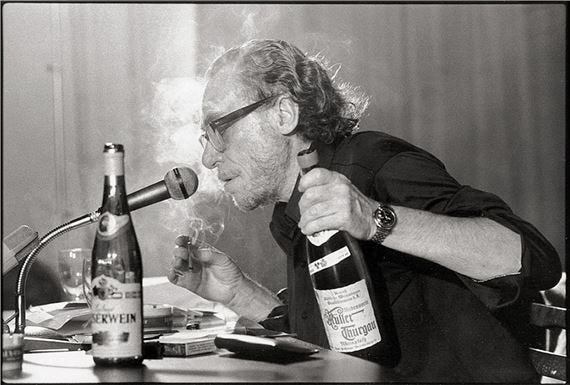

Welcome to Issue One of Find What You Love and Let It Kill You.
This month we’ve got some Bukowski inspired prose mixed in with our usual fare of crime and transgressive tales, so you’re in for a real treat.
Find What You Love and Let It Kill You.
That quote opens my crime novel Say Goodbye When I’m Gone and I also have it tattooed across my upper chest. It’s an important phrase and one I try to remind myself of often because it’s how I want to live my life. After all, if you haven’t found something worth dying for, what are you living for? That’s a quote too although I’m not sure who said it…
Although, I doubt it’ll kill me (I hope not anyway) Punk Noir is one of my loves, that’s why today in between my eldest daughter’s junior high school graduation ceremony and changing my youngest daughter’s diapers, I sat down to put together this awesome issue of 7 stories by 7 talent writers.
It’s real mixed bag that I dug A LOT and hope you do too.
If you haven’t found something you love enough to kill you, perhaps go look for it after reading this issue.
Enjoy and all the best,
Steve
Everywhere
by
David Milner

Across the open space of a park, she is there. In the confines of his studio apartment her presence lingers. The rustle of nylon as she crossed her legs he hears as a prelude to the longest chord change of clothes hitting the floor. His reflection in the mirror above the bathroom sink he barely recognises. She is the smell of soap. He can’t stomach the same foods they used to like and share. His diet of toast, crisps and biscuits augments his intake of vodka, coffee and anything he can lay his hands on to smoke. Rice makes the inside of his mouth itch. The thought of pancakes reduces him to tears.
She’s everywhere but in his bed. He’s given up sleeping there. He hides on the sofa, or under a duvet on the floor where he dreams of her watching the sun go down in someone else’s arms.
“Are you feeling alright?” His mum asked over the phone.
“Just a head cold, is all. I’m fine.”
He stopped phoning. Stopped working. His funds diminishing, his days stumbling into weeks he’s no longer counting.
He ventures outdoors mostly to air his clothes as the fabrics are beginning to stink. At night he loiters at the entrance of the underground station. Drinking from a can of strong lager because vodka is getting too expensive. People only seem to notice him when he coughs.
“Forgive my tubercular symphony.” He laughs, for the hell of it, he laughs.
There are those who say he is wallowing in self-pity. But what can they tell him? This love is real; let it eat him alive from the inside.
He lifts his can to a crescent moon. She is never coming back. Let there be no escape from his goddess divine.
End
Bio:
David Milner’s stories have appeared in print and online at Punk Noir, Duality Books, Spillwords Press, Impspired Magazine. His plays include, I’m Still Here, performed live on Resonance 104.4FM Radio, and Shinwell: An Extra Break For Breakfast, published by Impspired Books. He adapted and directed his story, Into the Breach, as a short film for the Rise of The Resistance festival, screened at Bloomsbury Theatre and Wellcome Collection. A founder member of the punk band Vee V V (Edils Records), David finds his stories when he’s out and about, or they find him. He lives in South London.
Five Copper Bullets
by
Devin Misko

Late August rain pelts Los Angeles; a scarcity miracle that drowns brush wildfires. Dust-laden Santa Ana runoff gurgles in storm drains, pours out into the Pacific. Florian’s dining room curtains billow like rural ghosts.
He stares at his tidy backyard as a breeze faint with char enters through the open windows. A cigarette burns near his fingers while his mind rattles with devious manifestations and puzzle pieces. The week-long bender is bullish.
Dana walks into the room, her face disgusted at the silver serving tray lined with blow. She brandishes Florian’s Colt .38 casually. It was his father’s, a beat cop during bootlegger times. The old man was buried somewhere in Forest Lawn, his secondary piece the only tangible connection remaining. Dana slides it to the center of the table as if it’s a place setting. He begins to inquire about the gesture’s meaning, but his tongue is a swollen mute.
She doesn’t wait for his chakras to align. “This way is much faster. Less tortuous for all parties involved.”
His fingers fumble the gun before picking it up, the steel cold, almost foreign. Its heft belies the compact size.
“My daddy left me this,” he murmurs through a swinging jaw, retelling tired familial history.
Her glare undercuts burgeoning machismo. “You should go join him. Sooner rather than later.”
Florian levels the gun at his wife, pushes thick words forth. “Holds six rounds. Effective in close quarters. Maybe we both pay him a visit.”
“You don’t have the guts,” she spits, pulling a fist from her pocket. Opens it. There are five copper bullets in her palm. “Damn fool.”
Raindrops crater the pool surface as light fog unfolds over the patio. Florian puts the black-hole barrel to his temple. His lips crease to a sanitarium smile.
“I trust you, love.”
Bio:
Devin Misko resides in Memphis, Tennessee. He has an adult son. His stories are dedicated to his late mother. He has been published in Shotgun Honey and Punk Noir Press.
Duty of Care
by
Sophia Rose
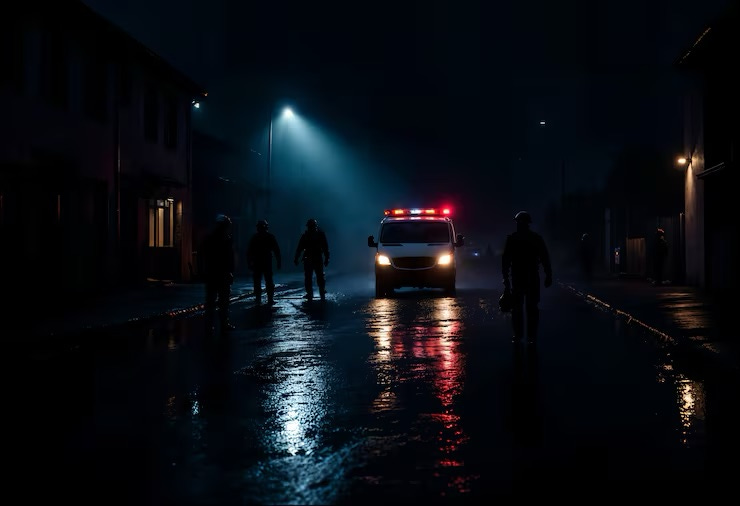
“I like my coffee like my men—ground up and in my freezer.”
I smiled before anyone else could decide whether to laugh. Marion’s joke still hovered in the air—black, strong, in my bed—and mine arrived like a dead body cooling on a linoleum floor. Conversation died fast. A good joke should go down smooth—mine had bones in it.
“Sophia,” Marion said finally, shaking their head, “you are the most gruesome medical professional alive.”
Hardly. Darkness implies imagination. This job requires endurance. Paramedics don’t invent horror—we inventory it. We zip it, lift it, stabilise it, pretend it doesn’t follow us home. You learn which parts of yourself to cauterise. You learn which urges to feed so the rest stay quiet.
I excused myself from brunch, patted backs, drove to my shift. Green uniform. Cheap tea. gazing at my smoke screen pretty reflection. I laughed again—too loud—for a joke that meant it, the mirror fogging up like it didn’t want to see me either.
Accidents blur. Overdoses repeat themselves. Abuse never does. Women folded inward, apologising for being broken. Children already fluent in fear. Everyone promising it was the last time. It never is. Social services does paperwork. I stop the bleeding. Someone has to come back later. someone mustlove the work enough to finish it.
The call crackled in: Mother and child locked in a closet. Male offender present. Police en route.
I thought of my cellar. Of the hum—steady, loyal. Two chest freezers holding their temperature like a vow. 0°C to -20°C. Preservation is key.
“Find something you love”, Charles Bukowski said “and let it kill you”.
After my work is done, perhaps I will make one of my freezers my own final resting place tonight.
Bio:
Sophia Wiseman-Rose was born in Richmond, London and is currently living in central London (UK). Her fiction has previously appeared in Black Petals magazine, Yellow Mama webzine, and on the Scare You To Sleep podcast.
The Swim
by
Laurie Brown

She had lived in the stone cottage at the foot of the lake most of her adult life. It was her haven, her solace, her nemesis. More than the house with its drafty windows and creaking floors, it was the lake with its cold, crystal waters and constant breezes both pleasant and bracing that kept her there for the better part of fifty years. The lake called to her like a lover she couldn’t ignore, like a drug.
She swam there every day. Some days, it was a quick plunge. Others, she spent floating for hours, cavorting like an otter. Today she would swim to the island in the middle of the lake as she did every year on her birthday. Above her dark clouds massed, yearning to spill their contents. The wind picked up and blew icy spray across her time-ravaged body. A wry smile flickered across her face and with careful steps she waded in. The woman dipped her right hand into the cold water and made the sign of the cross, not because she was religious—she was far beyond the help of any church—but as a sign of supplication and enduring devotion. When the water reached her thighs she dove. As soon as she broke the surface her body responded with the sure, strong strokes of a confident swimmer.
Halfway to the island pain flared, running up her arm, followed by tightness in her chest. Her breath caught. She ignored it and swam for the island. Her traitorous left arm hung limply by her side. Sweat gathered along her brow and blurred her vision. The woman stopped and let the water guide her one last time. Today would be a final baptism, marking an eternal union. Her spirit buoyed as her body sank.
Bio:
Laurie Brown is an active member of Inked Voices, Sisters in Crime, and the Authors Guild. Her debut middle-grade novel DON’T FRET FRIDA comes out in September 2026.
The Urbexer Decides
by
Robb White

That day he’d climbed to the roof of the sweater factory, he was hooked. He remembered hanging on to the sumac branch thirty high above the ground by one hand, concrete rubble below, pretending to be a monkey scratching himself. His friends watched from below, cheering and laughing, one hoped he’d fall.
Rory’s followers were few but loyal. Other urbexers praised his skills hanging by his fingers from a crumbling rooftop—regardless of the carping a couple did no matter what contortions he had to perform or risks he took weaseling his body through busted drainage pipes reeking of dried fecal matter or animal carcasses or finger-walking from one ledge to another. He stepped across exposed I-beams in upper floors of abandoned factories and hotels so many times that when a newfollower typed BIG YAWN in the comments, he told his cameraman Scotty he was going to give that bozo something to remember.
His fingertips were numb through his climbing gloves—another bad sign. The nerves in his forearm were burning. He didn’t need pain making a life-or-death decision, but he had to decide soon, make a move, or send Scotty for help. He’d been stuck on that ledge, immobilized because he’d misjudged the distance to the next handhold and the torque necessary once he released his grip. Scotty’s head appeared again from the window granary below. Rory told him to keep the camera in position. He wanted the move captured, memorialized, even if . . .
He blanked out that thought. First things first. Decide. Make the jump, make the jump, do it—
The longer he waited, the worse the odds. Ninety feet to the frozen ground. He wouldn’t bounce.
That day at the sweater factory: they cheered, they watched me do it.
Fuck it . . .
-END-
Bio:
Robb White lives in Northeastern Ohio. A Derringer-nominated author of genre fiction, he has three series detectives. The Russian Heist (2019) was selected Best Novel in Thriller Magazine’s competition. Betray Me Not was selected for distinction by the Independent Fiction Alliance in 2022. His recent publications include a collection of noir tales: Fade to Black: Noir Stories of Grifters, Drifters, and Unlovable Losers (2024), a suspense thriller, Jersey Girl (2025), and a crime novella, Easy Money (2025).
If That’s All There Is
by
Carlotta Dale

When I was a young’un, folks used to call caffeine and nicotine the Breakfast of Champions. I don’t hear that much anymore. Too many people eating yoghurt and blueberries. If they added a hefty tot of Scotch, well, then we’d have something to talk about.
But they don’t, so we don’t, and they think I’m an old ornery cuss, anyway.
I am old. And grumpy. Take that as a given. I’m—almost—the geezer you see shuffling down the sidewalk, so bent over he’s staring at his sneakers.
Things won’t come to that, not after the cirrhosis verdict.
But while I’m waiting for the inevitable, I’m having a drink.
On the jukebox, Peggy Lee is asking, “Is That All There is?”—at least she doesn’t oversing, although she sounds kinda forced—but let’s talk that over for a minute.
No, I wasn’t having a ball, or dancing, but those are peripheral, right?
Breaking out the booze is the whole damn point.
I’m housed in an assisted living place—not much assistance, frankly—but the saving grace is the bar downstairs. The assisted living management had lobbied hard for its removal, but the bar was on a long lease. So nuts to them, sez I.
Codgers are welcome in bars: we may not drink much—the social security doesn’t stretch far—but we don’t take up much room and we don’t cause trouble.
So, the bar. Beats wandering the aisles at Rite-Aid.
I’ve heard that Bukowski himself used to hang out here, but hell, half the dives in L.A. say that. Guy got around. Fans tell me I resemble him, to which I say, “kindred spirits.”
A lake of whiskey. That’s how I envision the afterlife. Great big party, right? Unless it’s a circle in hell. Either way, can’t happen soon enough.
Bio:
Carlotta Dale lives in Los Angeles, a city she adores from the top of her head to the soles of her feet, in a house that’s essentially an oversized cabinet of curiosities. She still uses adverbs—sparingly—and her novelette, The Parrots Come Again, is available on Amazon. Dale has had short stories published in Punk Noir Magazine, Pistol Jim Press, Literary Garage, Alien Buddha Press, Bristol Noir, Bunker Squirrel Magazine, and Mythic Picnic. She can be found on Twitter @carlottadale38 and on BlueSky @carlottadale.bsky.social.
Love and Let Die
by
Nathan Pettigrew

On my fiftieth birthday, I truly believed my father might be a vampire. At seventy, his health put mine to shame. I had hypertension, severe eczema, all kinds of shit while the old man lived his best days on a pot of coffee and two packs of Winstons.
He used to sentence killers to death for a living, but even after retirement, the old man didn’t slow down. He accelerated, smoking three packs before hitting the hay.
I never worried about getting sick because of him. I had his genes, after all, and followed in his footsteps, inhaling two packs between waking up and crashing.
Though, I preferred Marlboros.
On my fifty-first birthday, my PCP sent me to specialist who diagnosed me with Stage 4 lung cancer. I didn’t tell the old man, thinking he might be ashamed.
We got along best whenever we smoked together, and in those moments, he taught me everything I knew. Who and who not to rob without getting caught, and where to launder my fortune.
Turned out, local crime boss Victor Searcy ended up in the same assisted living facility as my father and somehow recognized him despite going senile.
Cops told me that Victor shot my father in the neck while he was taking his last drag of a Winston. Doing what he loved most until his final breath.
Guaranteed to join him within the calendar year, I saw no reason to not die from what I loved doing most. I upped my game to three packs of Marlboros daily, even from dusk ‘till dawn.
Like father, like son, as they say, but we definitely weren’t vampires.
Bio:
Nathan Pettigrew was born and raised an hour south of New Orleans. He is the author of Tales from Terrebonne, forthcoming in 2026 from Rock and a Hard Place Press, and Managing Editor of Mythic Picnic.
Another smashing start of the series. Great work by Carlotta and Nathan ...
Life's going to kill you regardless if you love anything in it or not.
Antinatalism for the win