

A PUNK NOIR INTERVIEW WITH MICHAEL CURRAN OF TANGERINE PRESS

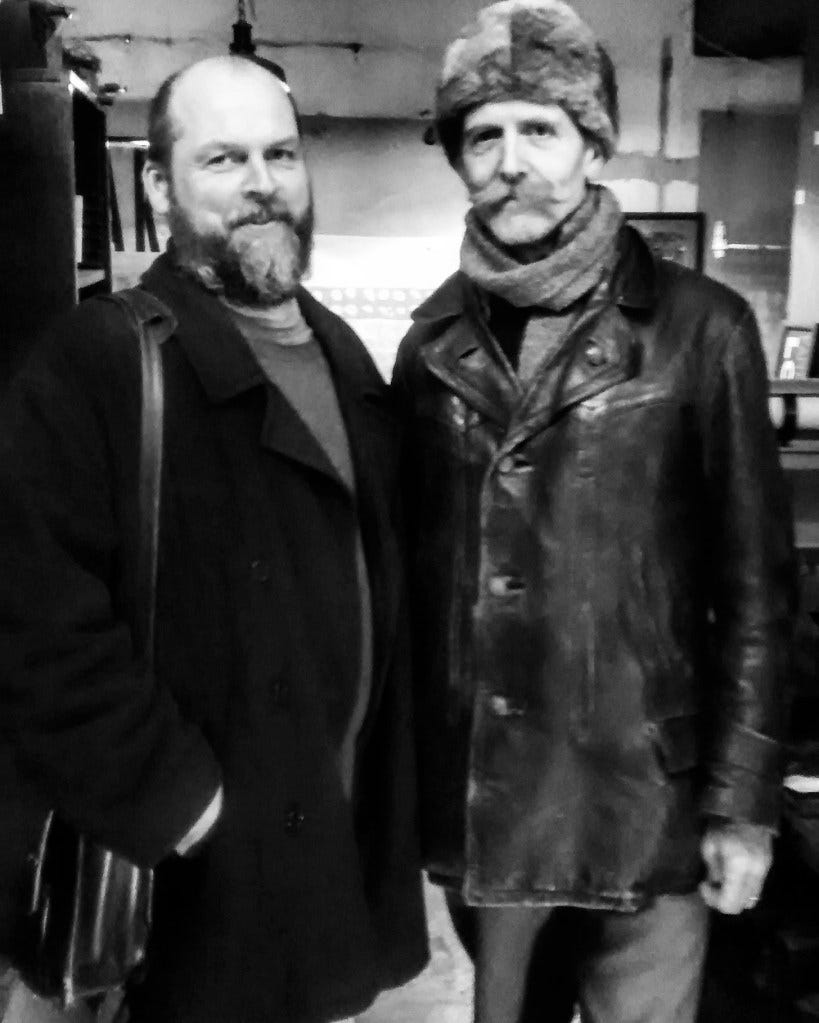
As an editor of a magazine dedicated to people who love to read and write, I know I’m definitely not alone in saying: I abso-fucking-lutely love books. I, probably like you, have a room in my small apartment dedicated to these paper narcotics. It’s a hackneyed expression but nothing beats having a good book in your hands.
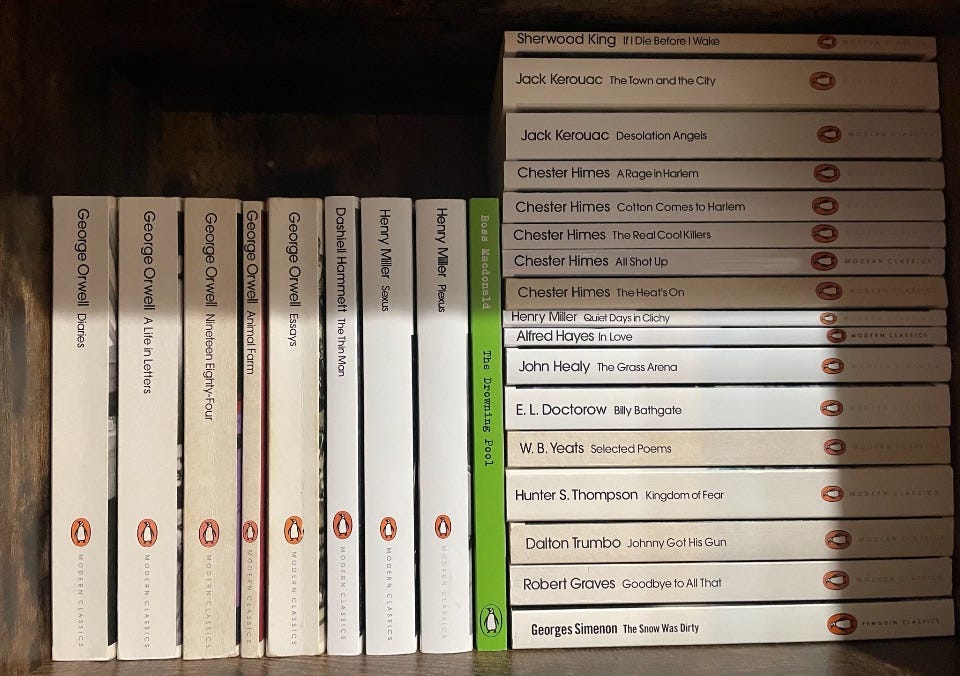
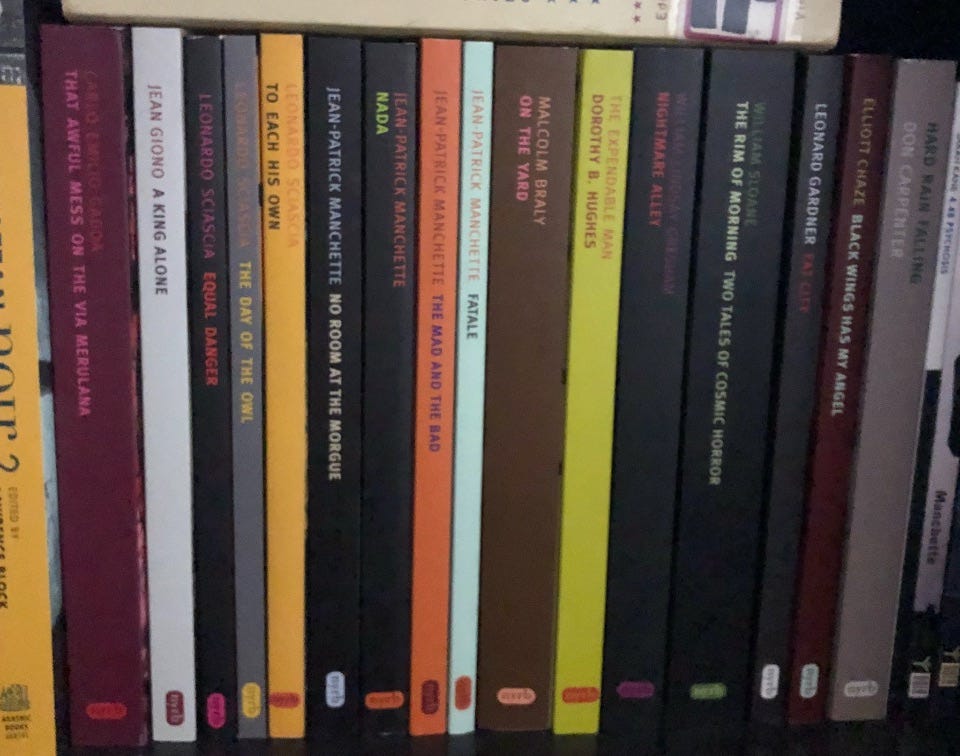
However, for me, the addiction goes a little bit beyond. I’m not just a reader, I’m a collector. I have shelves of the Penguin Modern Classics, piles of those Vintage Red Spine Classics, and mounds of the colourful New York Review Books. These aren’t simply great books; I collect them because they look pretty awesome on the shelf and are well put together considering they’re mass made publications. In this day and age where too many things are downloadable, they feel good to hold and the front covers are unique and beautiful.
Aesthetics really do matter.
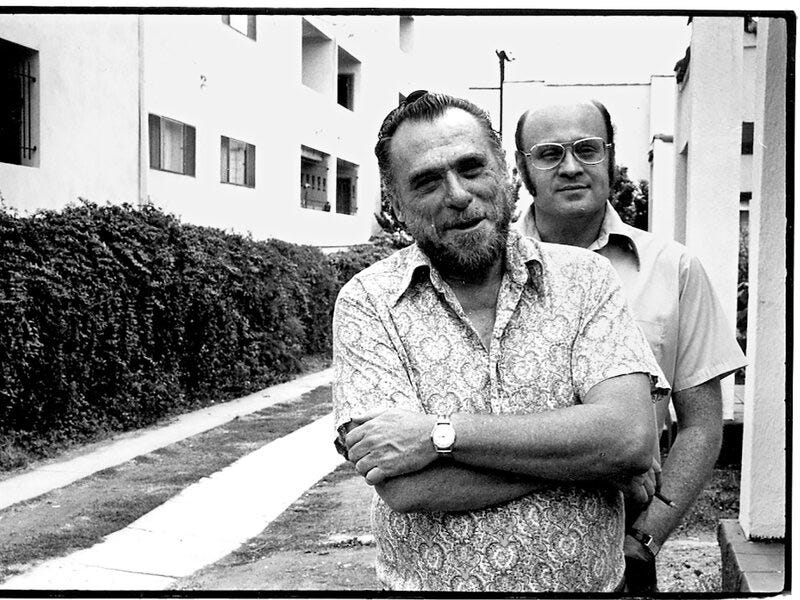
Glimpsing Charles Bukowski’s beautiful Black Sparrow edition of Post Office on the shelf of that secondhand shop when I was still in high school kicked off my love for everything literary. It was how good the book looked that initially caught my eye and as overdramatic as it may sound it changed my life.
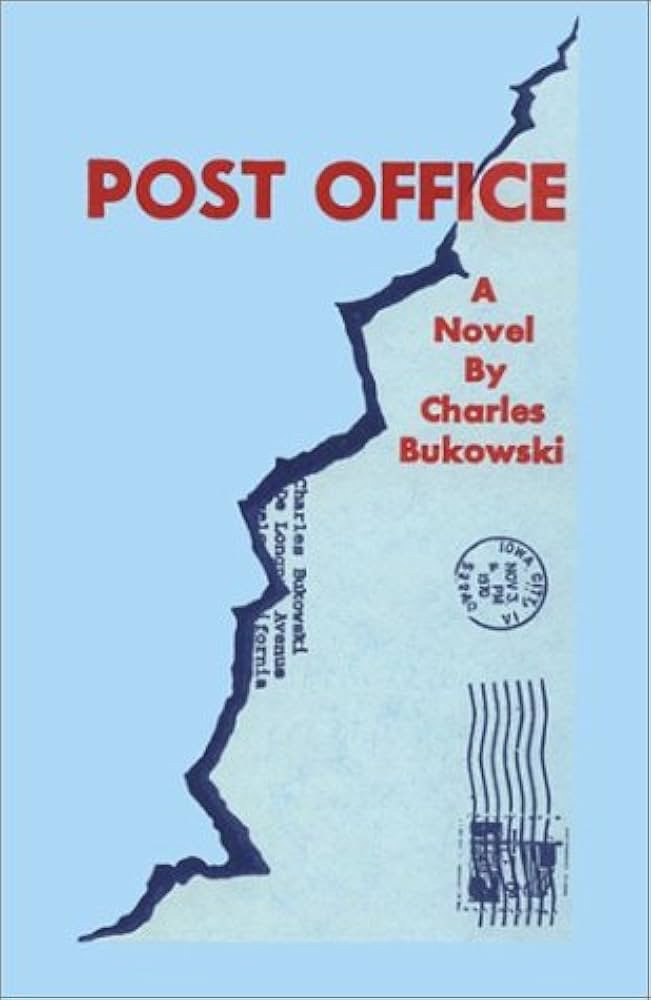
No, you can’t judge a book by its cover but if it looks like a labour of love by the publisher, often you can bet the written words inside are top tier as well. What I’m saying is – if a press, or a publisher truly cares about what their author is saying, they make sure it’s packaged right. Nowadays, so many publishers just whack some crappy generic picture of the front cover and ship the book out, looking for a quick turnaround. The quick buck.
Things used to be better.
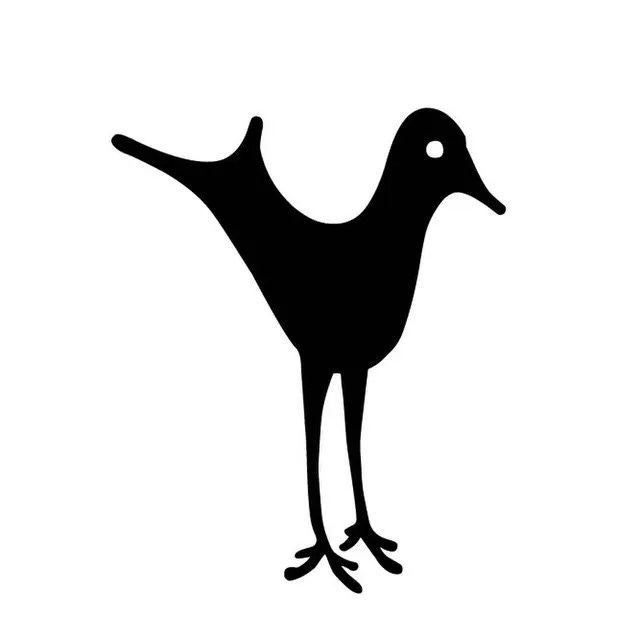
No one did it better than John Martin of Black Sparrow Press back in the day. The covers were modern art, the pages felt heavy and you could actually see the pulp in the paper. I fucking loved that.
Sadly, what do we have now? Mass Market paperbacks with flimsy covers and poorly glued spines or Electric Readers. Don’t get me wrong, I have two E-Readers. Bought when most downloadable books cost less than a convenience store cup of coffee. But have you seen the prices nowadays!? It’s kind of crazy for something that disappears as soon as the battery is dead, and you can’t lend to a friend nor sell when you’re done with it. That’s why in the last few years I’ve gone back to the paper product, which most of the time is cheaper than the electric version anyway. Weird, huh? Go figure.
However, it is 2026 where nothing is quite how it used to be. At the risk of sounding like the malcontent forty-something I am, they just don’t make them how they used to. I got a new book delivered to me the other day and the pages fell out because it wasn’t even glued together properly. Where’s the love for the book instead of the buck? Where are the publishers like John Martin? The Presses where you can pick up one of their books and see the absolute love and dedication that has gone into making every single copy? Unfortunately, in the times we are living in they are far and few between.
There is one still standing out there though.


Tangerine Press.
Their tagline — Publishing misfits, mavericks, and misanthropes since 2006 —lets you know straightaway you’re lin good company when you discover them.
I originally came across Tangerine Press through the poetry of Billy Childish(another last man standing in a wasteland of vapidness) and fell in love with their books because if you hold one it’s like holding a piece of handmade artistry in your fingertips. Handbound, handsewn chapbooks, broadsides, and limited editions by the likes of literary greats like Akiko Yosano, Jack London, William Wantling, William S. Burroughs, and of course Billy Childish. Tangerine Press are by and far my favourite Indie Press right now and easily one of the best Presses out there.
I was lucky enough to chat to Tangerine Press’s founder Michael Curranrecently and ask him a few questions for the readers of Punk Noir Magazine.
Hi Michael, Big Fan of your work and everything you do on the literary indie scene. Thank you for agreeing to answer a few questions about your TP and telling us a little about your inspirational story. To kick things off, would you tell us a bit about yourself and Tangerine Press. Your origin story if you will.
Well, to go way back, it all began with a book mail order company I ran between 1996-98. This was called Tangerine Books, which was based in a small office on an industrial estate in Battersea, south London. I ended up living there too. I championed small press publications, primarily from the USA. It was my full-time occupation, though I needed a second and sometimes third job to get by — cleaning aeroplanes at Heathrow, telephone surveys in Elephant & Castle, kitchen porter in seedy west London hotels.
Tangerine Books did not work out so in the summer of 1998 I threw 500 unused catalogues and a sluggish pc into a skip and entered the construction industry. I got my City & Guilds carpentry certificate in 2001.
The years rolled by and the itch was still there. I wanted to go further this time and actually start publishing writers I admired, but make the press stand out from the others by presenting the books in the best way possible. And what was the best way? Bind the books myself. Essentially combining a love of reading with the satisfaction I got from making things as a ‘chippie’.
Tangerine Press was founded in 2006.
For the first seven years I was dealing with publishing matters in my own time after work, with only a screaming foreman to look forward to the next day. I went full-time with the press in 2013 after a serious work-related injury meant I had to knock carpentry on the head.

In those early years I was publishing without a care for profit, just wanting it to break even. Tangerine was my escape, a little corner of the world where I had some kind of say in the matter. When the injury hit, and it was obvious I could not go back to The Building Game, I realised that if I rationalised everything, started relationships with suppliers and source materials from the best places possible, I might be able to make it work as a going concern. I had a couple of lucky breaks early on: one was my beloved transit van being stolen, which I was devastated about. But by that time, it was surplus to requirements as I was no longer humping power tools around from job to job. The luck was I got the insurance money and never bought another van.
I really admire the scrappy way you started out. 20 years later you’re still going from strength to strength which is testament to everything you’ve created. Talking on that —Tangerine Press’s books are some of the most beautiful I’ve seen since the good old days of Black Sparrow. How much of an inspiration was John Martin and his press to you?
That is a very kind thing to say. Thank you. I think John Martin and what he achieved with Black Sparrow Press was key to my understanding of the publishing world: that it was actually accessible to anyone with the passion and commitment to make a go of it.
Black Sparrow sustained me as a reader in my twenties, when I was a mess, then again as a publisher, in a new century, when the mess got organised.
In 2025, shortly after John died, I contacted James Kelman — someone whose opinions I greatly value — and we had a few exchanges, mulling over John’s achievements and legacy, focusing on the less well known writers like Fielding Dawson, of whom we are both fans.
A sense of bereavement overwhelmed me when John died, leaving a curious unease for a few weeks, an emotion I was not expecting. An ever-present guiding light had gone out. I had been plotting a tribute project to John for quite some time: he was aware of this, which is something, I suppose. It is close to completion and should see publication in 2026. I never met John, but I did email him about ten years ago, to express my admiration and respect. After a brief to and fro, I tentatively asked whether he had any advice. He replied: ‘Keep it small, keep it independent, and keep going!‘ That was all I needed. Whenever I have mentioned this to people who knew him well, they say that was typical of John, an eternal optimism and joy to make things work.
I’m looking forward to the John Martin Tribute Project as I’m sure a lot of Punk Noir’s readers will be as well. We count a lot of BSP fans in our readership. Talking of our readers:
I love your tag line — Publishing misfits, mavericks and misanthropes since 2006 because those are the people I try to publish at punk noir too. How important is it for you to publish those considered outsiders these days and why are you more interested in those kinds of writers?
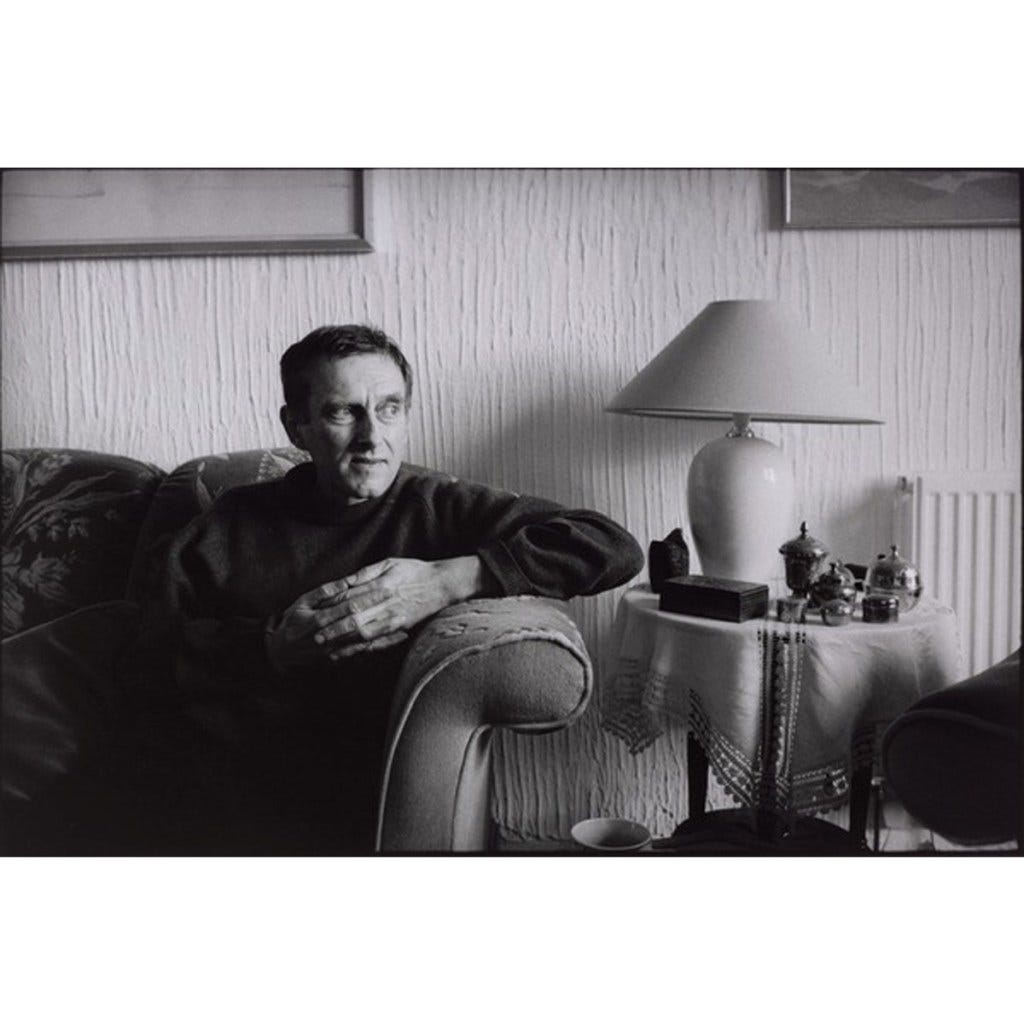
That tag line was kind of tongue in cheek at first. I was after a rhythmic, slightly confrontational vibe, yet broad enough to cover the full spectrum: new or ‘unknown’ writers, those with a strong cult following, whilst sitting alongside the likes of William S. Burroughs et al. I have been accused by some of getting a vicarious thrill from certain writers on the Tangerine list. I assume they mean those who have been in prison or burdened with addictions of various kinds. That is not my motivation. It is more an admiration of those ‘outsiders’ who have made extraordinary and dramatic changes to their lives and been able to meaningfully relay past degradations through writing or art, then have it resonate with readers whose backgrounds are often poles apart. The idea of an outsider is open to interpretation too: James Kelman, for example, despite a brief encounter with the Establishment by winning the Booker in 1994, and finding it not to his liking; also Rebecca Gransden, on her island; Meena Kandasamy stands up and says what needs to be said. But it is always about the written word well written, regardless of background.
I wish there were more Presses willing to take risks on outsiders like Tangerine Press does. Unfortunately, many publishers shy away from anything or anyone too unique or out of the mainstream nowadays. It’s a shame, but it makes special publishers like yourself stand out all the more I reckon.
Going into the future, what are your hopes for Tangerine Press?
That Tangerine survives as long as it is meant to and remains relevant during that time.
As you already know, I’m a big fan of Billy Childish. Along with Charles Bukowski and Raymond Carver, he has been a massive inspiration for me and my writing. I wanted to ask: what’s he like to work with? And how excited do you feel when you get a new Childish poetry manuscript in your inbox?
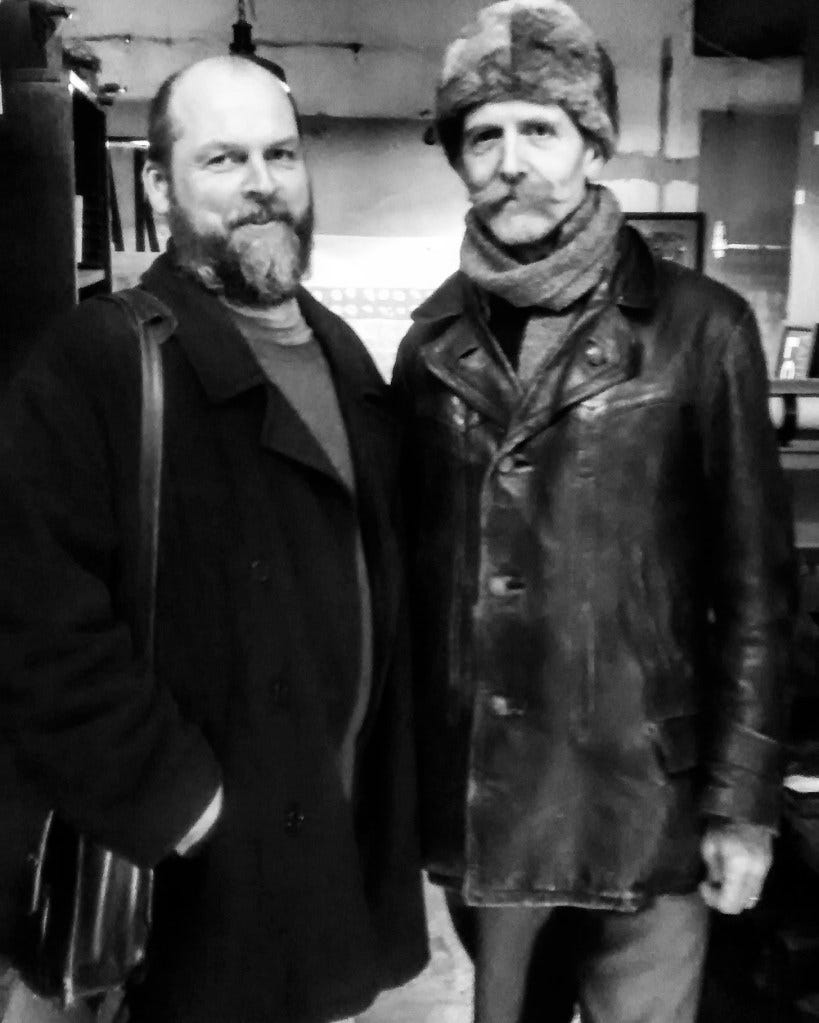
I often talk about how important it is for the writer to separate from their work as quickly as possible, leaving us with what I call the triangle, the three points being: the writer, the publisher, the work. In other words, the novel or whatever it is must be looked upon as in and of itself, an entity that the publisher/editor and writer must hone together into a publishable form. This requires a lot of trust from the writer, which I am acutely aware of. Some find it much harder than others. Billy Childish completes this separation very quickly, with little encouragement from myself. Perhaps that is because of the way I receive his work. It is not in manuscript form. I get regularish emails containing a poem, which I acknowledge, then copy and paste into a word document. This continues for a number of months until there are enough poems, one hundred or so, to consider for a collection. I print off what we have, then head down to Billy’s house and we go through them together: discarding, editing, poetic ‘cut and shuts’, swapping round stanzas and lines, pencil scribbles, red ink underlinings, that kind of thing. Billy is the main driver on this, of course, and I interject when I think we have hit a stumbling block: sometimes it helps, other times he completely ignores me.
If someone said to you, ‘I’m off to see a poet to go through their manuscript for three or four hours,’ you would rightly think they have lost their mind. What an awful prospect! But with Billy it is not. We have a lot of laughs along the way, as he is great company. I always look forward to these trips: they are entertaining, slightly chaotic, the odd bit of tension, breaks for cups of tea, a breather, discuss future projects, how to promote this one and so on. But the bottom line is he is the writer, I am the publisher and we get the job done.
Wow, without sounding like too much of a fanboy (I hope), spending a few hours talking poetry with Billy sounds like a very cool afternoon indeed.
I actually wrote to Billy not too long ago, not expecting much back in return, but I received a beautiful Christmas card he’d painted himself and a very kind note, which meant a lot at a rough time in my life. He’s one of the last real punks standing, I believe. Anyway, apart from Billy, can you tell us a little more about some of the other writers and poets that you work with?
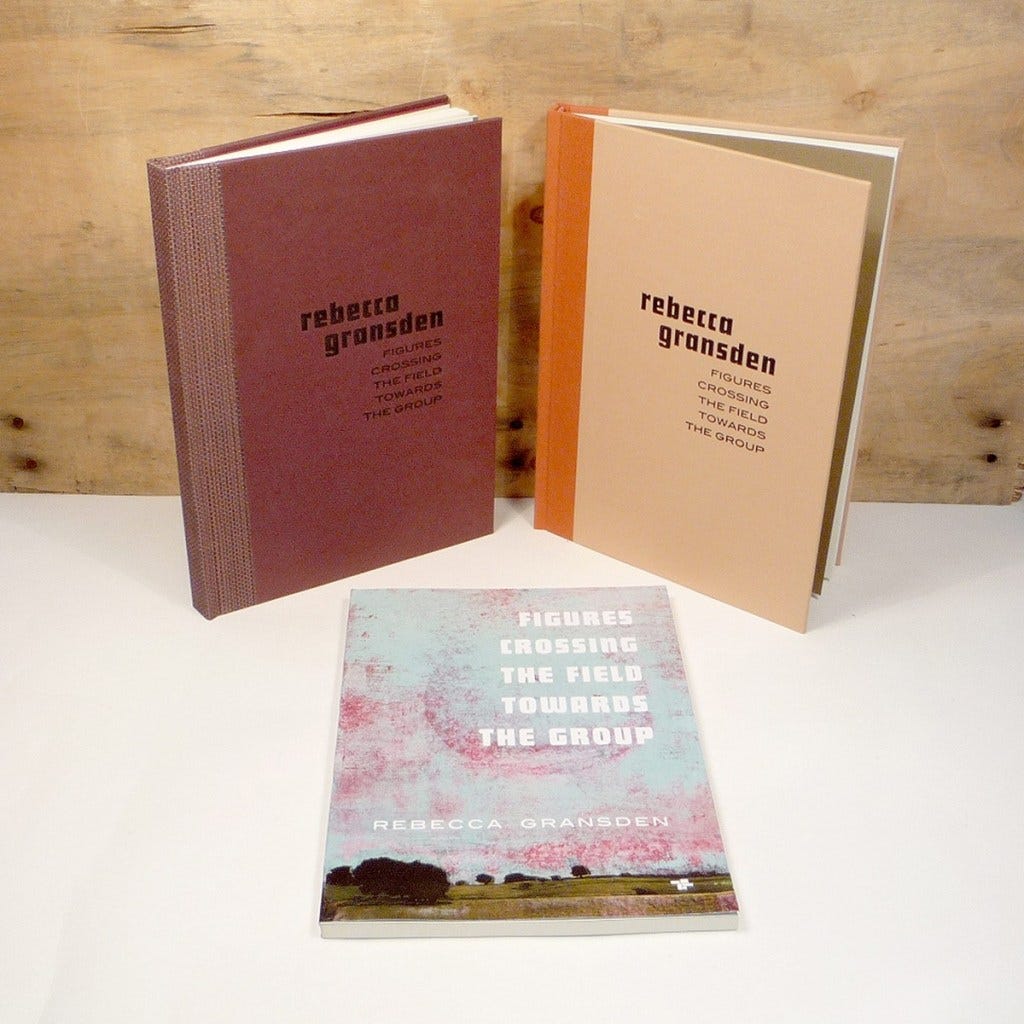
At the time of writing, Rebecca Gransden‘s novella Figures Crossing the Field Towards the Group was recently announced joint winner of The Queen Mary Small Press Fiction Prize. It was a pleasant surprise and boost for both of us, especially as 2026 marks Tangerine’s twentieth anniversary. This book and perhaps Rebecca herself remain an enigma. We have never met, though there have been hundreds of emails over the years, a couple of phone calls and a handful of letters. I first came across her work in 2018 and published a chapbook of stories called Analoger +1 in 2020. She is wonderful to work with as she gets on with the job of writing, a real grafter. It was a team effort, that was what struck me most about working on this book: pooling our knowledge, thoughts, and resources to get the book reviewed and read by as many people as possible. But intentionally steering clear of the ‘big’ outlets, the major papers: they ignore us, so why pay attention to them? Likewise, Rebecca has an acute sense of the risks I take as a publisher, and I of her boldness, focus and talent, so the mutual understanding is strong.
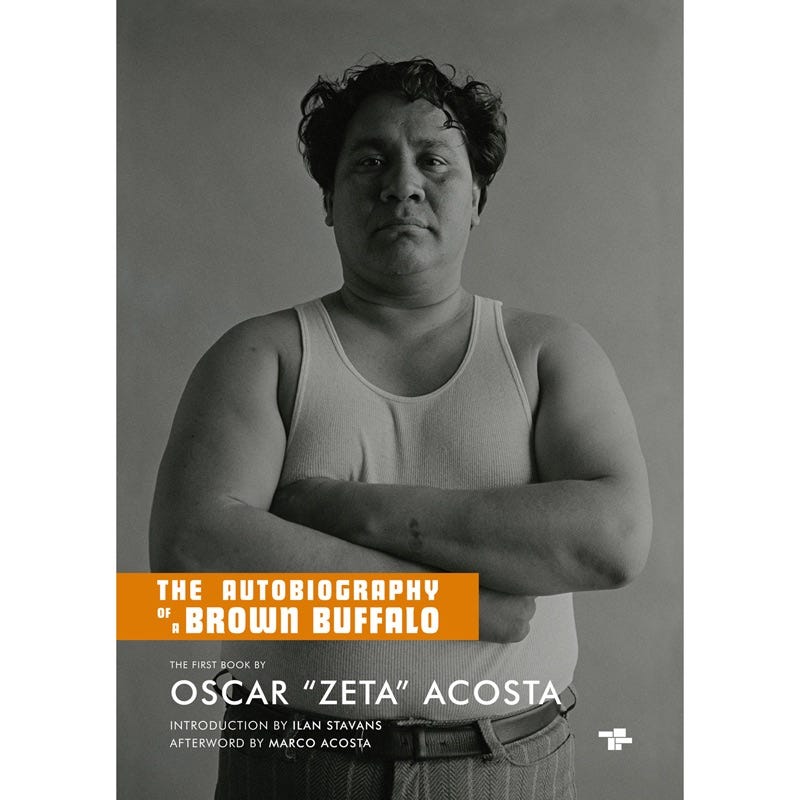
Sometimes I reissue what I refer to as ‘lost modern classics’, generally from the 1960s and 70s. The authors are for the most part deceased, which means dealing with Estates and close relations. More often than not, you are digging up buried emotions, unresolved grievances, all mixed up with a love and loyalty that only a family dynamic can embrace. One example is the Tangerine edition of Oscar “Zeta” Acosta‘s 1972 cult classic The Autobiography of a Brown Buffalo. He was Hunter S. Thompson‘s lawyer, a civil rights advocate, an unusual character, as unstable, provocative and wild as his association with Dr Thompson might imply. He disappeared in 1974, aged 39 years. The last anyone heard he was heading to an island off the coast of Mexico with a suitcase full of cash to seal a large cocaine deal. He was officially declared dead in 2014. I approached his son Marco initially, also a lawyer, who was supportive and steered me towards Penguin Random House in New York. It took three years of protracted negotiations to get to the stage of finally signing contracts and then publishing in 2018. Most of that time was me emailing and being past around various PRH colleagues, each one putting up petty obstacles and passing the buck, then eventually tiring of my persistence and not replying for months on end, with one good soul finally relenting.
A major publishing house with an international reputation and a one-man indie press in south London came to an understanding, how about that?
Dr Ilan Stavans, a recognised Acosta scholar, wrote the introduction. I asked Marco to write an afterword and whoosh! It all poured out, how awful his father could be: crazy, self-harming, absent, explosive, melancholic, violent. Yet there was a love underlying all the chaos and uncertainty. You also have to consider that Marco was only a teenager when his father disappeared. It was a curious piece of writing and an unexpected ending to an extraordinary publication.
Reviews were varied too: ranging from the reissue being a fascinating insight into the 1960s counterculture worthy of re-investigation, through to one particularly irate individual, who regarded the books very existence as an aberration, accusing the author of racism and sexism, and questioning why I bothered to republish it in the first place.
Mr Acosta was an entertaining, intelligent, challenging writer with a stylistic flow and great sense of dialogue. The Brown Buffalo definitely merited all that time, expense and effort bringing his work to a new audience.
That sounds fascinating and is definitely going on my review list.
Okay, to wrap this interview up do you have any closing statements, Michael?
Whether a writer or publisher, delusion is your greatest asset.
A huge thanks from Punk Noir to Michael Curran for this interview, and please do go and check out Tangerine Press and buy some of their beautiful books.
@
https://www.thetangerinepress.com
https://thetangerinepress.com/SHOP/
Interview by Stephen J. Golds
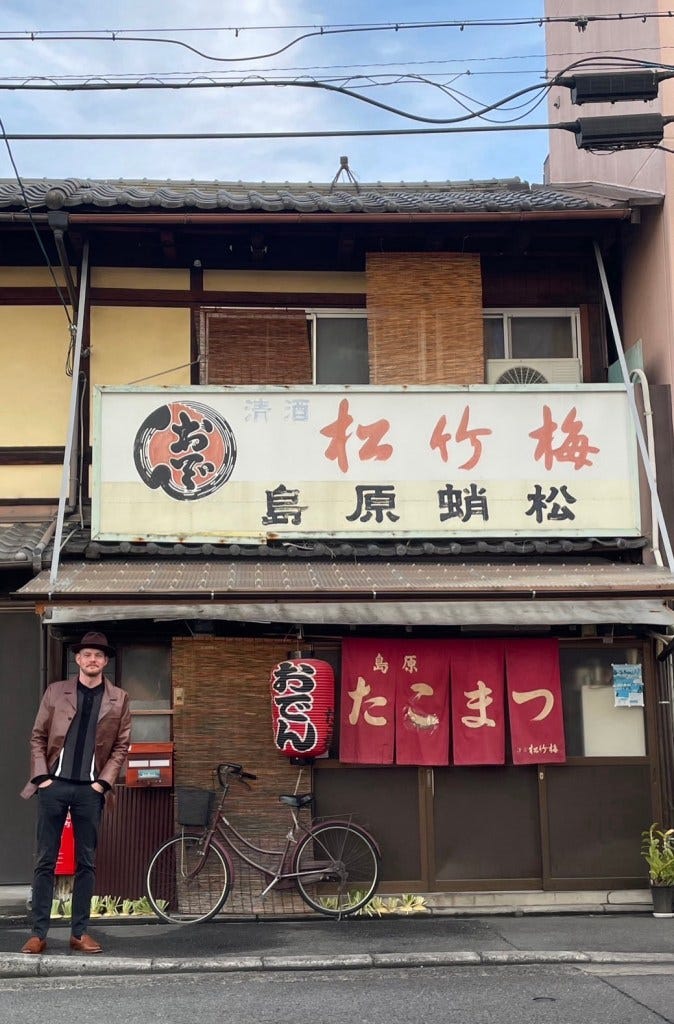
Stephen J. Golds was born in North London, U.K, but has lived in Japan for most of his life. He speaks the language pretty well and makes great takoyaki.
He writes primarily in the noir and dirty realism genres and is the editor-in-chief of Punk Noir Press.
Spot on, chap! Literary America owes a great debt to the Black Sparrow Press. A man prepared to gamble on Charles Bukowski - the alcoholic writer other publishers wouldn’t touch with a barge pole - Black Sparrow paperbacks featured a perfect-bound style - made it feel extra special, like the words of the master! Dinosauria, We - Bukowski's crowning glory in my opinion. :)
Enjoyed the hell out of that. Well done. - Jim